
Protein Molecular Weight Markers

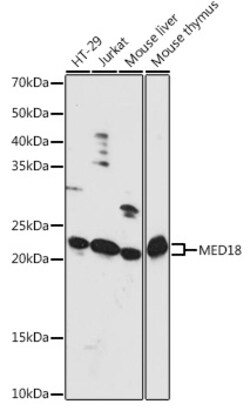
ABclonal Technology MED18 Rabbit pAb

MED18 is a component of the Mediator complex, which is a coactivator for DNA-binding factors that activate transcription via RNA polymerase II (Sato et al., 2003 [PubMed 12584197]).

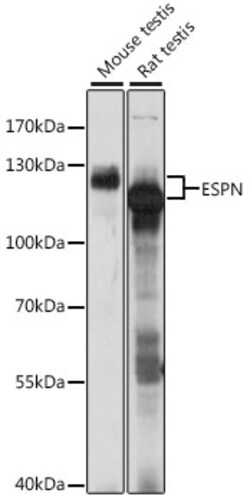
ABclonal Technology ESPN Rabbit pAb
This gene encodes a multifunctional actin-bundling protein. It plays a major role in regulating the organization, dimensions, dynamics, and signaling capacities of the actin filament-rich, microvillus-type specializations that mediate sensory transduction in various mechanosensory and chemosensory cells. Mutations in this gene are associated with autosomal recessive neurosensory deafness, and autosomal dominant sensorineural deafness without vestibular involvement.
![ABclonal Technology [KO Validated] LRRC59 Rabbit pAb](https://assets.fishersci.com/TFS-Assets/CCG/product-images/5000134622.jpg-250.jpg)
ABclonal Technology [KO Validated] LRRC59 Rabbit pAb
Enables RNA binding activity and cadherin binding activity. Predicted to be involved in positive regulation of Ras protein signal transduction and signal transduction. Located in endoplasmic reticulum and mitochondrial nucleoid.
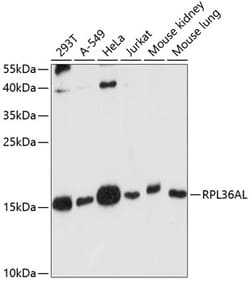
ABclonal Technology RPL36AL Rabbit pAb
Cytoplasmic ribosomes, organelles that catalyze protein synthesis, consist of a small 40S subunit and a large 60S subunit. Together these subunits are composed of 4 RNA species and approximately 80 structurally distinct proteins. This gene encodes a ribosomal protein that is a component of the 60S subunit. The protein, which shares sequence similarity with yeast ribosomal protein L44, belongs to the L44E (L36AE) family of ribosomal proteins. This gene and the human gene officially named ribosomal protein L36a (RPL36A) encode nearly identical proteins, however, they are distinct genes. Although the name of this gene has been referred to as ribosomal protein L36a (RPL36A), its official name is ribosomal protein L36a-like (RPL36AL). As is typical for genes encoding ribosomal proteins, there are multiple processed pseudogenes of this gene dispersed through the genome.
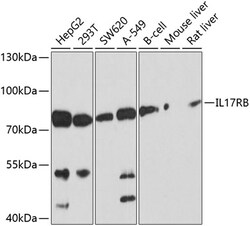
ABclonal Technology IL17RB Rabbit pAb
The protein encoded by this gene is a cytokine receptor. This receptor specifically binds to IL17B and IL17E, but does not bind to IL17 and IL17C. This receptor has been shown to mediate the activation of NF-kappaB and the production of IL8 induced by IL17E. The expression of the rat counterpart of this gene was found to be significantly up-regulated during intestinal inflammation, which suggested the immunoregulatory activity of this receptor.
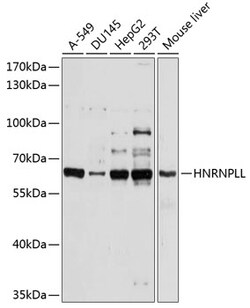
ABclonal Technology HNRPLL Rabbit pAb
HNRNPLL is a master regulator of activation-induced alternative splicing in T cells. In particular, it alters splicing of CD45 (PTPRC, MIM 151460), a tyrosine phosphatase essential for T-cell development and activation (Oberdoerffer et al., 2008 [PubMed 18669861]).
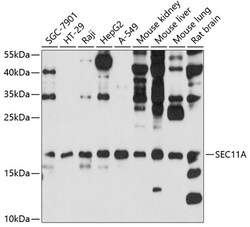
ABclonal Technology SEC11A Rabbit pAb
This gene encodes a member of the peptidase S26B family. The encoded protein is an 18kDa subunit of the signal peptidase complex and has been linked to cell migration and invasion, gastric cancer and lymph node metastasis. Alternative splicing results in multiple transcript variants. A related pseudogene has been identified on chromosome 8.
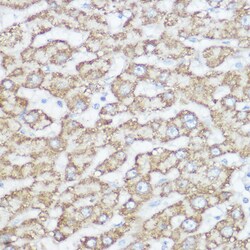
ABclonal Technology NDUFA4 Rabbit pAb
The protein encoded by this gene belongs to the complex I 9kDa subunit family. Mammalian complex I of mitochondrial respiratory chain is composed of 45 different subunits. This protein has NADH dehydrogenase activity and oxidoreductase activity. It transfers electrons from NADH to the respiratory chain. The immediate electron acceptor for the enzyme is believed to be ubiquinone.

Hach Company 5500sc Standard 2 Low-Range Phosphate standard solution, 2 L - for 5500sc low-range phosphate analyzer
Standard 2 low-range phosphate calibration solution in a 2 L bottle for use with the Hach 5500sc low-range phosphate analyzer. Use this certified standard to perform calibration and routine accuracy checks to help ensure reliable phosphate measurements.
- Provides a low-range phosphate calibration standard for analyzer verification.
- Packaged in a 2 L bottle for extended use and fewer changeovers.
- Supports routine accuracy checks and instrument performance verification.
- Ready-to-use formulation for convenient calibration procedures.

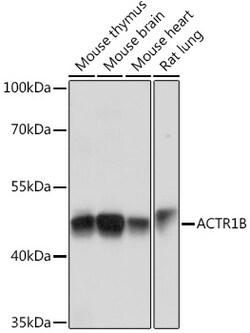
ABclonal Technology ACTR1B Rabbit pAb
This gene encodes a 42.3 kD subunit of dynactin, a macromolecular complex consisting of 10 subunits ranging in size from 22 to 150 kD. Dynactin binds to both microtubules and cytoplasmic dynein and is involved in a diverse array of cellular functions, including ER-to-Golgi transport, the centripetal movement of lysosomes and endosomes, spindle formation, chromosome movement, nuclear positioning, and axonogenesis. This subunit, like ACTR1A, is an actin-related protein. These two proteins, which are of equal length and share 90% amino acid identity, are present in a constant ratio of approximately 115 in the dynactin complex.
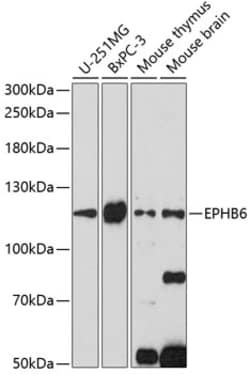
ABclonal Technology EPHB6 Rabbit pAb
This gene encodes a member of a family of transmembrane proteins that function as receptors for ephrin-B family proteins. Unlike other members of this family, the encoded protein does not contain a functional kinase domain. Activity of this protein can influence cell adhesion and migration. Expression of this gene is downregulated during tumor progression, suggesting that the protein may suppress tumor invasion and metastasis. Alternative splicing results in multiple transcript variants.
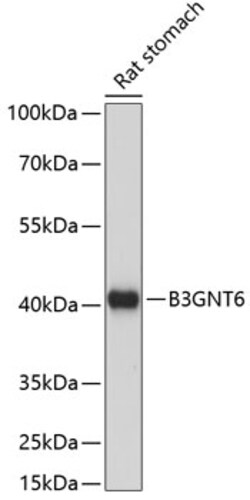
ABclonal Technology B3GNT6 Rabbit pAb
The protein encoded by this gene is a beta-1,3-N-acetylglucosaminyltransferase that adds an N-acetylglucosamine moiety to N-acetylgalactosamine-modified serine or threonine. The encoded enzyme is responsible for creating the core 3 structure of O-glycans, which are important components of mucin-type glycoproteins.
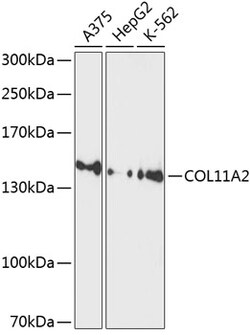
ABclonal Technology COL11A2 Rabbit pAb
This gene encodes one of the two alpha chains of type XI collagen, a minor fibrillar collagen. It is located on chromosome 6 very close to but separate from the gene for retinoid X receptor beta. Type XI collagen is a heterotrimer but the third alpha chain is a post-translationally modified alpha 1 type II chain. Proteolytic processing of this type XI chain produces PARP, a proline/arginine-rich protein that is an amino terminal domain. Mutations in this gene are associated with type III Stickler syndrome, otospondylomegaepiphyseal dysplasia (OSMED syndrome), Weissenbacher-Zweymuller syndrome, autosomal dominant non-syndromic sensorineural type 13 deafness (DFNA13), and autosomal recessive non-syndromic sensorineural type 53 deafness (DFNB53). Alternative splicing results in multiple transcript variants. A related pseudogene is located nearby on chromosome 6.

Medchemexpress LLC 3-Color Prestained Protein Marker (10-190 kDa)
MCE 3-Color Prestained Protein Marker has 8 blue-stained bands and 2 reference bands (one green and one orange band at 23 kDa and 65 kDa respectively). This Protein Marker is designed for monitoring protein separation during SDS-PAGE, confirming Western blot transfer efficiency on membranes (PVDF or nitrocellulose membrane) and for approximating the size of target proteins on the gel or blot.MCE 3-Color Prestained Protein Marker is supplied in gel loading buffer and is ready to use, with no heating, diluting or additional reducing agent necessary.
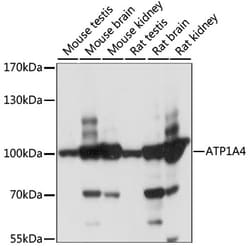
ABclonal Technology ATP1A4 Rabbit pAb
The protein encoded by this gene belongs to the family of P-type cation transport ATPases, and to the subfamily of Na+/K+ -ATPases. Na+/K+ -ATPase is an integral membrane protein responsible for establishing and maintaining the electrochemical gradients of Na and K ions across the plasma membrane. These gradients are essential for osmoregulation, for sodium-coupled transport of a variety of organic and inorganic molecules, and for electrical excitability of nerve and muscle. This enzyme is composed of two subunits, a large catalytic subunit (alpha) and a smaller glycoprotein subunit (beta). The catalytic subunit of Na+/K+ -ATPase is encoded by multiple genes. This gene encodes an alpha 4 subunit. Alternatively spliced transcript variants encoding different isoforms have been identified.